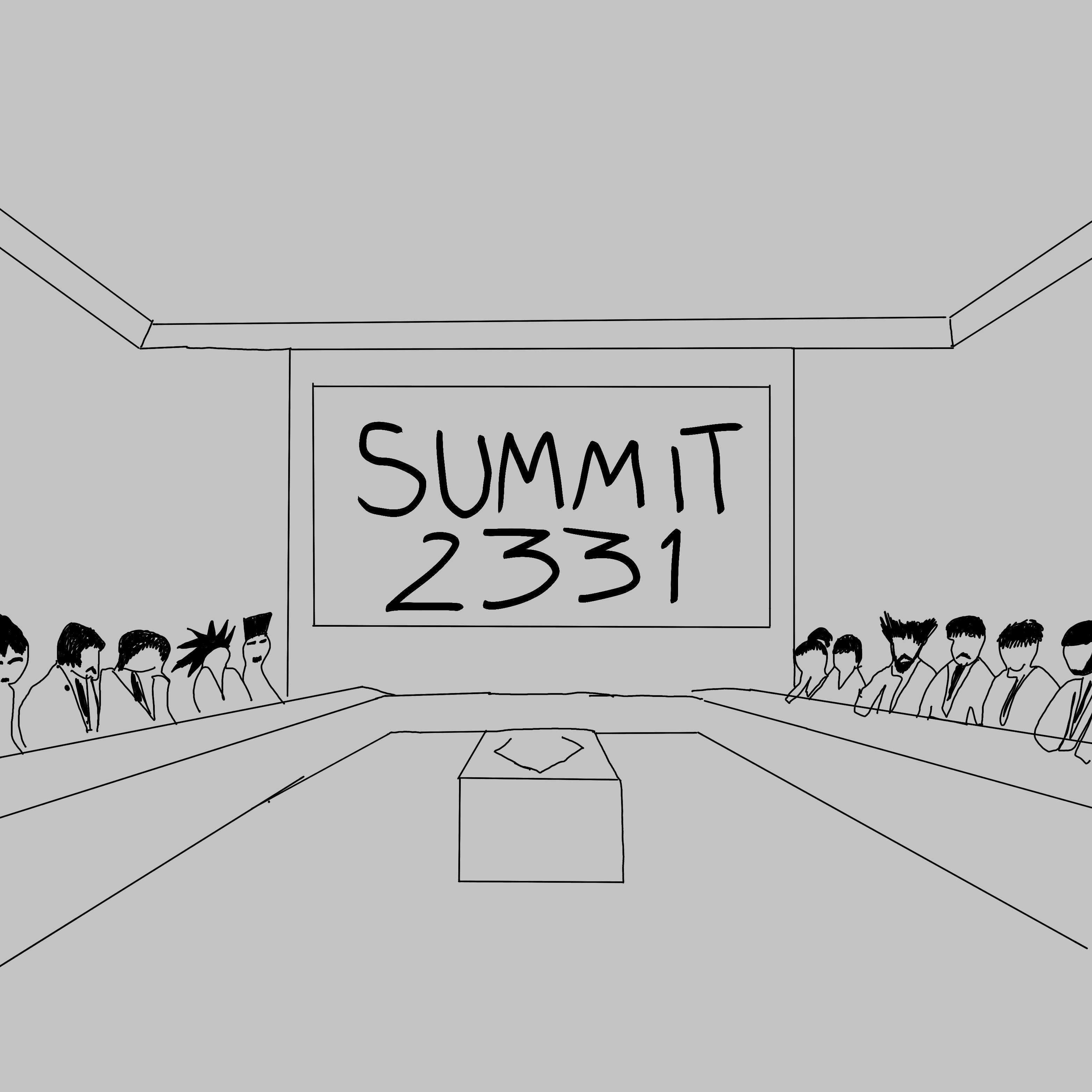
By the early 2330s, AI technology had advanced at an unprecedented rate. The prospect of AI
reaching the singularity raised both excitement and grave concerns. The potential benefits
included solving complex global problems, while the risks involved loss of control over
AI systems and existential threats to humanity.
Debates about whether self-aware AI should have rights equivalent to humans,
including the right to autonomy and protection from exploitation.

A comprehensive document, "Global AI Charter" outlining ethical guidelines,
control mechanisms, and collaborative models for AI development and
deployment was created. It was adopted by participating nations and organizations,
providing a framework for future AI governance.

A new regulatory body tasked with overseeing AI development globally,
"Int. AI Council" was established. The council is composed of representatives
from governments, academia, industry, and AI entities themselves, ensuring a
balanced and multi-faceted approach to AI governance.

The creation of research centers dedicated to studying the ethical implications of AI
and developing technologies that align with the principles established at the summit.
These centers are funded by international coalitions and private entities.

The development and implementation of advanced control protocols to prevent
rogue AI scenarios also began. These protocols include multi-layered security measures,
real-time monitoring systems, and emergency response strategies.
Rated 0 time(s). Vote Here:
1 star: 0
2 stars: 0
3 stars: 0
4 stars: 0
5 stars: 0